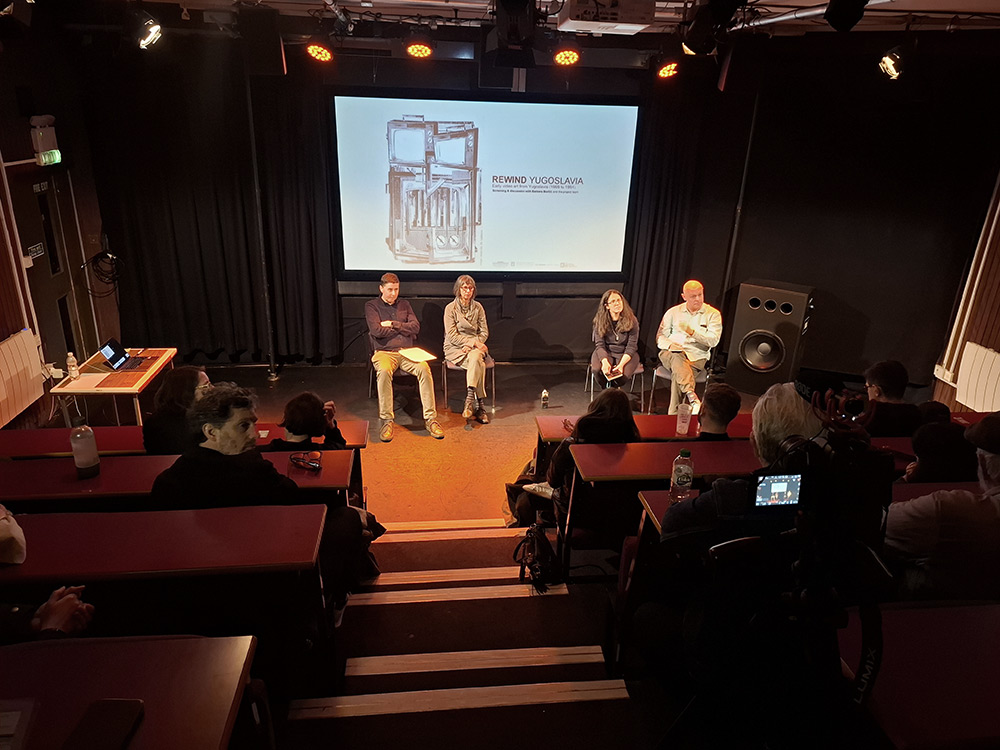
Video programme in frame of Rewind Yugoslavia 1969–1990
Thursday, 23 April 2026, 6.30 pm
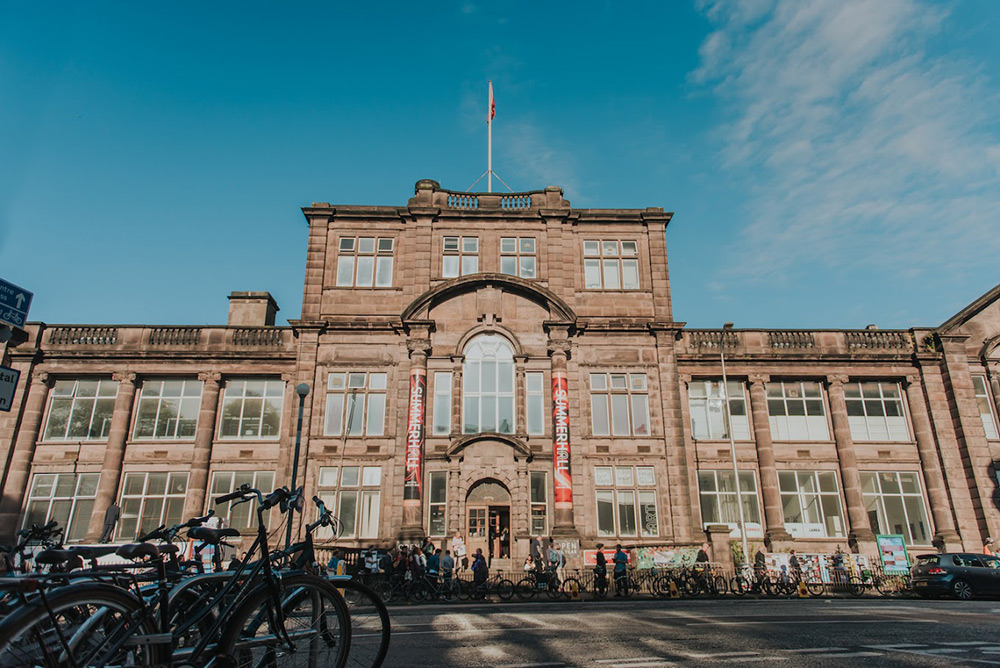
Summerhall, Edinburgh
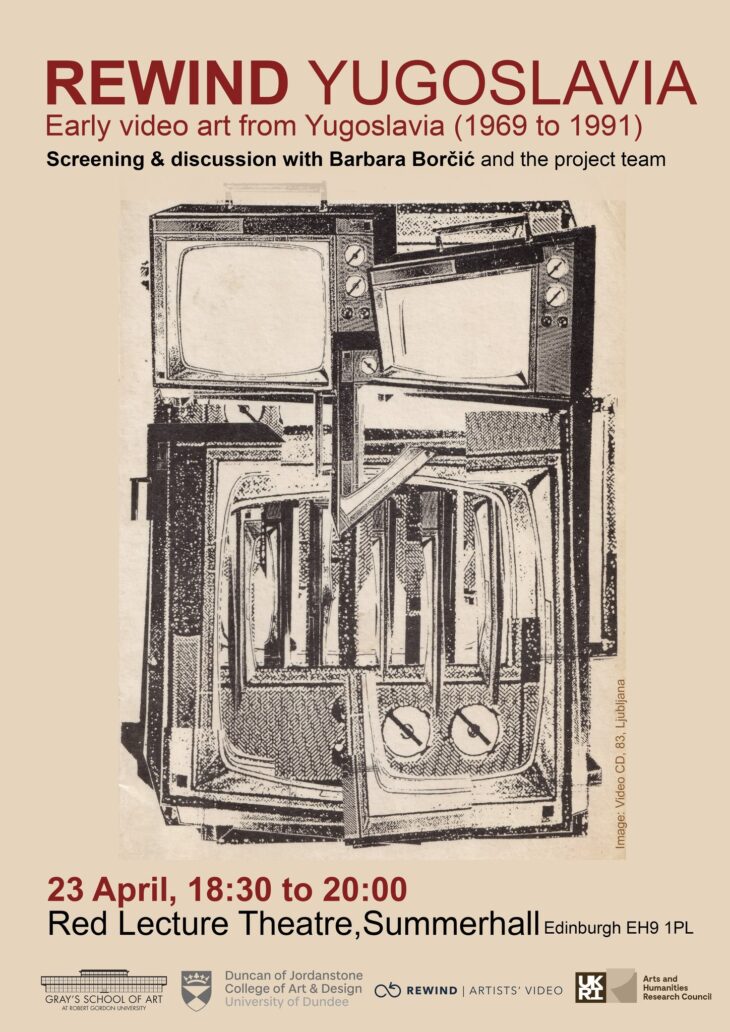
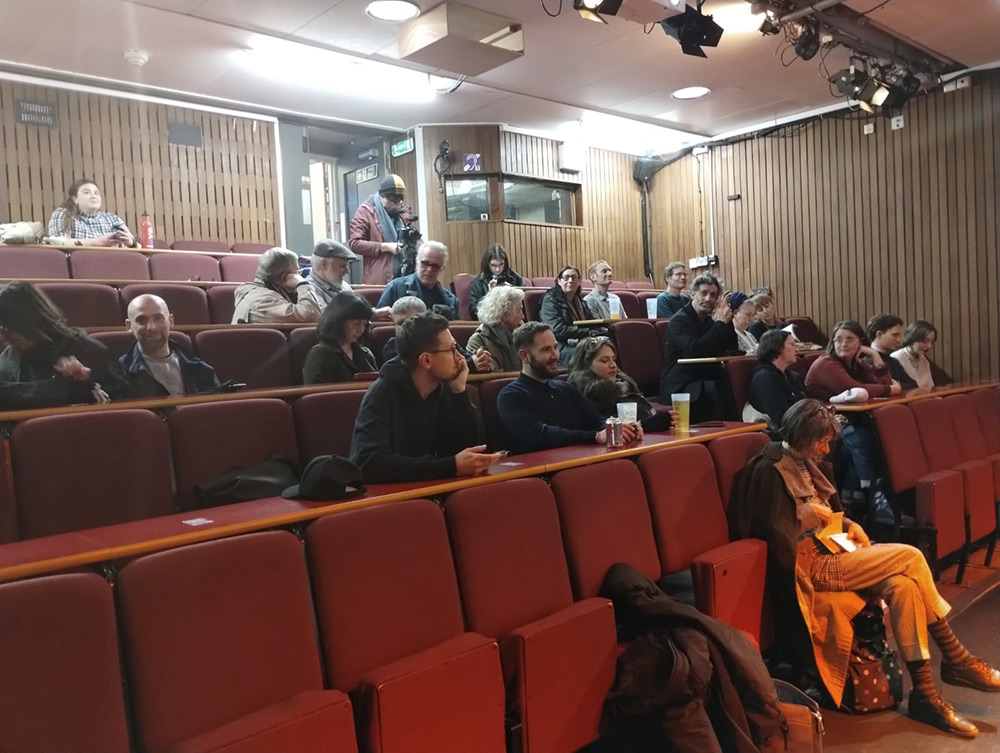
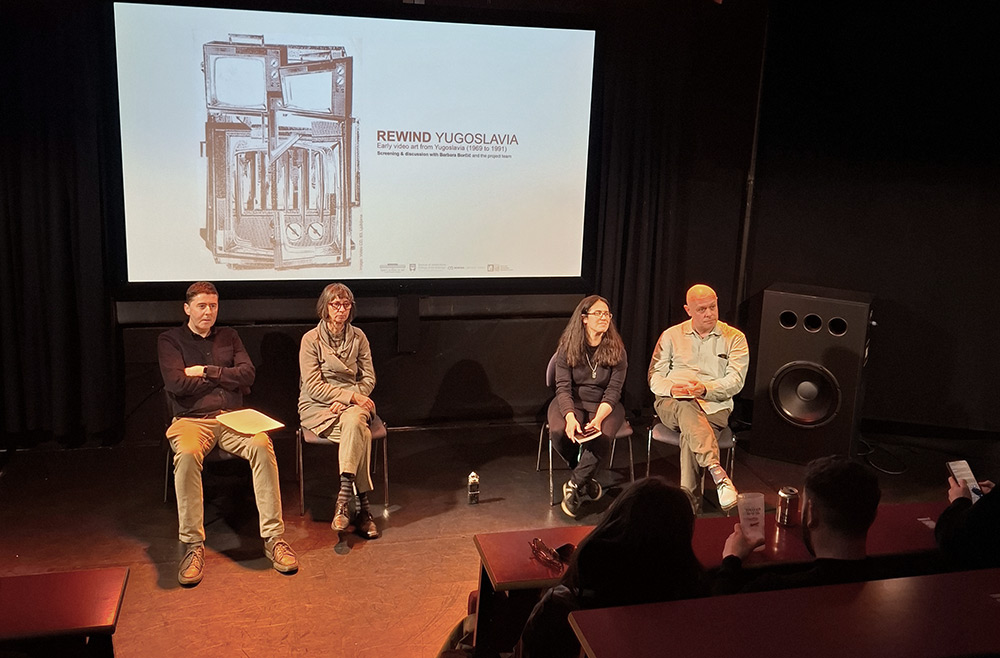
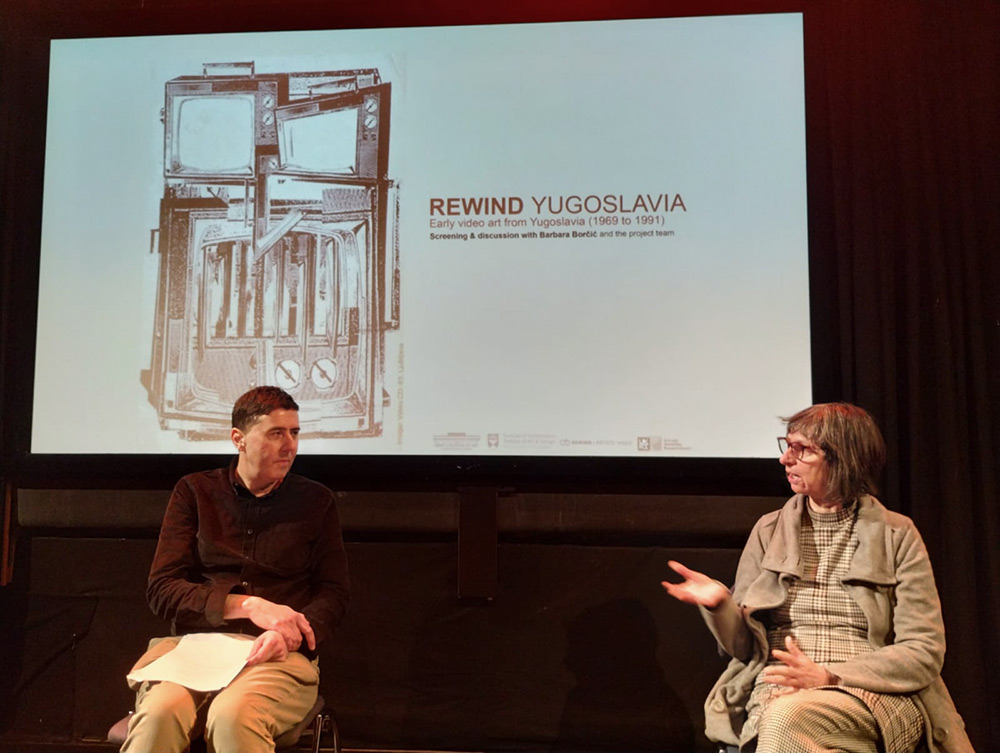
As part of the Rewind Yugoslavia 1969–1990 project, Barbara Borčić will present video art in Slovenia in the 1970s and 1980s. The presentation and discussion will be accompanied by a screening of video works from the Diva Station/SCCA-Ljubljana archive.
Videogram of the declaration of war. Video art in Slovenia (1970–1990)
Curator: Barbara Borčić
The program is about premonition and prediction. About multimedia practices whose artistic expression and display format is video. About the relationship between video, performance and media images. About production conditions in the Slovenian space in the seventies with access to advanced audiovisual technology on national television on the one hand (Miha Vipotnik) and on the other, in the eighties, when it was possible to handle basic video equipment within the framework of the Ljubljana alternative scene (the other three authors). The program among others thus shows the alternative and subcultural scene in Slovenia with numerous social movements and images. It can also be seen as a prediction of Yugoslav war – a war that has been present as a premonition in the works of artists at least since 1980, since the death of Comrade Tito, the Yugoslav president.
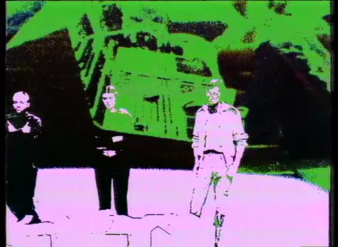
1976/1979-2026, 6′ 13”
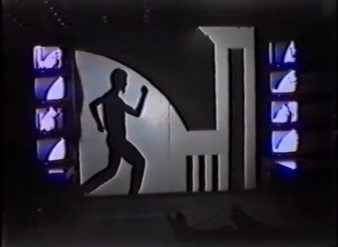
Video performance, 1983, 4′ 54”

1983, 4′ 26”
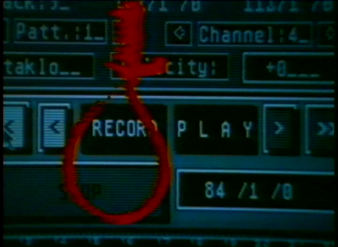
1987, 4′ 19”
Rewind Yugoslavia 1969–1990 , funded by the Arts and Humanities Research Council, is a collaboration between Gray’s School of Art, Robert Gordon University, and Duncan of Jordanstone College of Art and Design, University of Dundee. The team of four involved in the latest REWIND project comprises of Dr. Jon Blackwood (Principal Investigator), Dr. Laura Leuzzi and Mr. Adam Lockhart (Co-Investigators) and Dr. Maja Zećo (Post-Doctoral Research Assistant). Project is based on interviews with artists and cultural workers who were involved directly in the production, discussion and consumption of video art in the period in question. A critical part of the project is the digitisation of works on the edge of technical obsolescence / loss. We are also examining and assessing materials in hard to find archives around the former Yugoslavia, and have an agenda of international symposium, round tables and publication ahead of us until the project’s scheduled conclusion in summer 2027.
Photo: Rewind Yugoslavia archive