Screening and talk
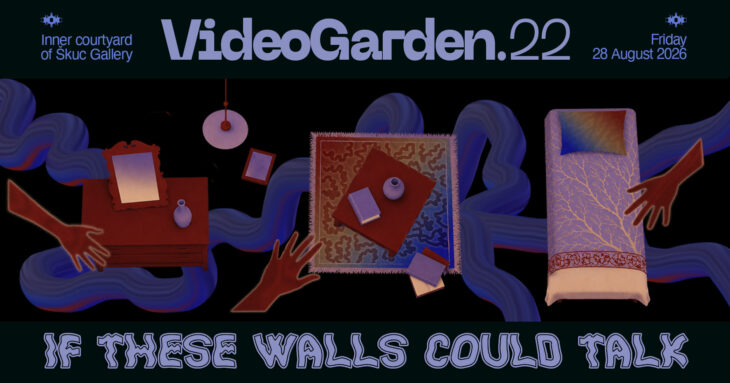
Friday, 28 August 2026, at 8 pm
Inner courtyard of Škuc Gallery, Ljubljana
Before the screening begins, there will be a public guided tour of the exhibition if these walls could talk with the artists and curators.
PROGRAMME
if these walls could talk
Participating: Maja Bojanić (SI), Krasimira Butseva (BG/GB), Anna Engelhardt (RU/GB), Ana Likar (SI)
Curated by: ETC. (SI) & Vasil Vladimirov (BG)
Duration: 56′
The selected films accompany the exhibition if these walls could talk at Škuc Gallery. Both the exhibition and the VideoGarden selection are situated between the physical remnants that surround and impact us and the speculative stories we project onto their surfaces. Stemming from the fifth issue of ETC. Magazine titled Full Circle, we focus on physical spaces serving as repositories of memories and material traces, accumulating the echoes of everything that has unfolded within and around them. On the other hand, the intentional negligence, destruction, or even attempts to construct history by imposing on the physical space function as violent acts and (re)constructions of historical narratives. Presented films employ documentary, speculative and suggestive methods, and layering of different narratives in order to tell stories of the past and their present echoes.
Slovenia, 2024, 10′
In this video installation, the artist links three events: the witch trials in Ribnica and the trial of Marina Češarek in 1701; the brief period in 1987 when the Mikl House was renamed the Marina Češarek Gallery for the duration of Jošt Rotar’s exhibition; and the devastating flood that struck these spaces in the summer of 2023. Seemingly unconnected histories are linked by natural disasters, the processes of preservation and archiving, and the fact that Marina Češarek was most likely born in the Mikl House. The text that accompanies the video is based on historical documents and conversations with experts. However, the attempt to interpret it in the Ribnica dialect and to include the linguistic slips that occurred in the process transforms the rigid structure of interrogations, museums, and archives into repeated failures and repetitions. Thus the artist takes us to a cave in Klek where women accused of witchcraft are said to have gathered, to the Marina Češarek Gallery, which she has brought to life through her work, and along the paths of the (late) search for St John’s wort, which was used to extort the truth from the accused but also as a medicine for wounds and sadness.
Slovenia, 2025, 13′
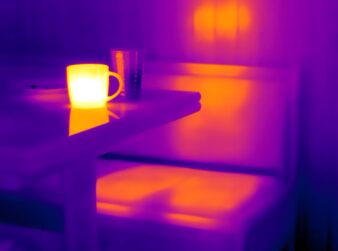
On 26 February 1992, Slovenian authorities carried out what is now known as the erasure – an administrative removal of 25,671 individuals from the Register of Permanent Residents of the Republic of Slovenia. These individuals, who held dual citizenship of Yugoslavia and another Yugoslav republic but had registered permanent residence in the Socialist Republic of Slovenia, were stripped of their legal status and basic human rights. Having to navigate life without access to medical care, unable to rent an apartment, work, or send their children to school, many were left at the mercy of their relatives. One of the erased people was Maja Bojanić’s great-grandmother, to whom the work is dedicated and whose warm presence the artist portrays in her video installation. The artist used an infrared camera to materialise her daily routine in a suburban apartment. In this way, her absence becomes visible, her existence traceable, felt despite the violence she experienced. While the artist acknowledges that recollection is always situated, she attempts to portray her great-grandmother beyond the trauma. The presence recorded by the thermal camera seems ghostly, and since many of the erased testified to being falsely recorded as deceased, the metaphor is not far from the lived experiences. To haunt is to remain, however, to persist, to resist. To the artist, it is an extension of witnessing. The artwork becomes a counter-archive and a way of remembering a person who died twice.
Bulgaria/United Kingdom, 2023, 23’
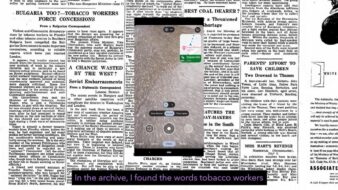
there is no smoke without fire interweaves official and unofficial history, socialist realism, and collective and individual memory of the recent past. The film employs archival documents from the archive of the Bulgarian Communist Party Plovdiv and State Security, alongside archival photographs from the Bulgarian News Agency, together with research conducted by art historians, curators and academics, alongside materials collected from field trips. The film ties a solid historiographical framework with speculative and suggestive methodologies, whilst it follows several narratives – the first workers’ & feminist strike in socialist Bulgaria in 1953 & its aftermath, alongside the history of the painting Strike of Plovdiv’s tobacco workers (1959) by the painter Georgi Bozhilov-Slona, and the author’s personal journey through these fragmented stories. The women’s strike in Plovdiv is a historical event absent from the state-led/run history & memory, as it is a disruption and protest against politics run by the communist regime. It, however, portrays the working conditions and rights of workers in the 1950s and shines a light on the political violence and repressions enacted by the regime.
United Kingdom, 2020, 10’
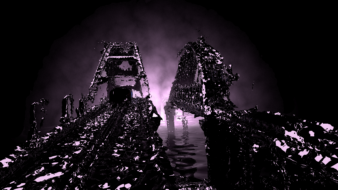
Adversarial Infrastructure is an investigation into the history of the Crimean annexation that employs deepfake technology as a research method. Dissecting the Crimean Bridge, the crystallised artefact of Russian colonial violence, this film aims to assemble a new image of logistical infrastructures as a type of hybrid warfare. Engelhardt’s investigative practice follows the traces of material violence, focusing on what could be seen as the ‘ghost’ of information. Working with toxic information environments that stem from structures of extraction, occupation and dispossession, she sees through this data haze by combining satellite data, digital reconstruction and fictional devices. Informed by decolonial approaches, her work interrogates Russia’s imperialist interventions.
Photo: Škuc Gallery archive
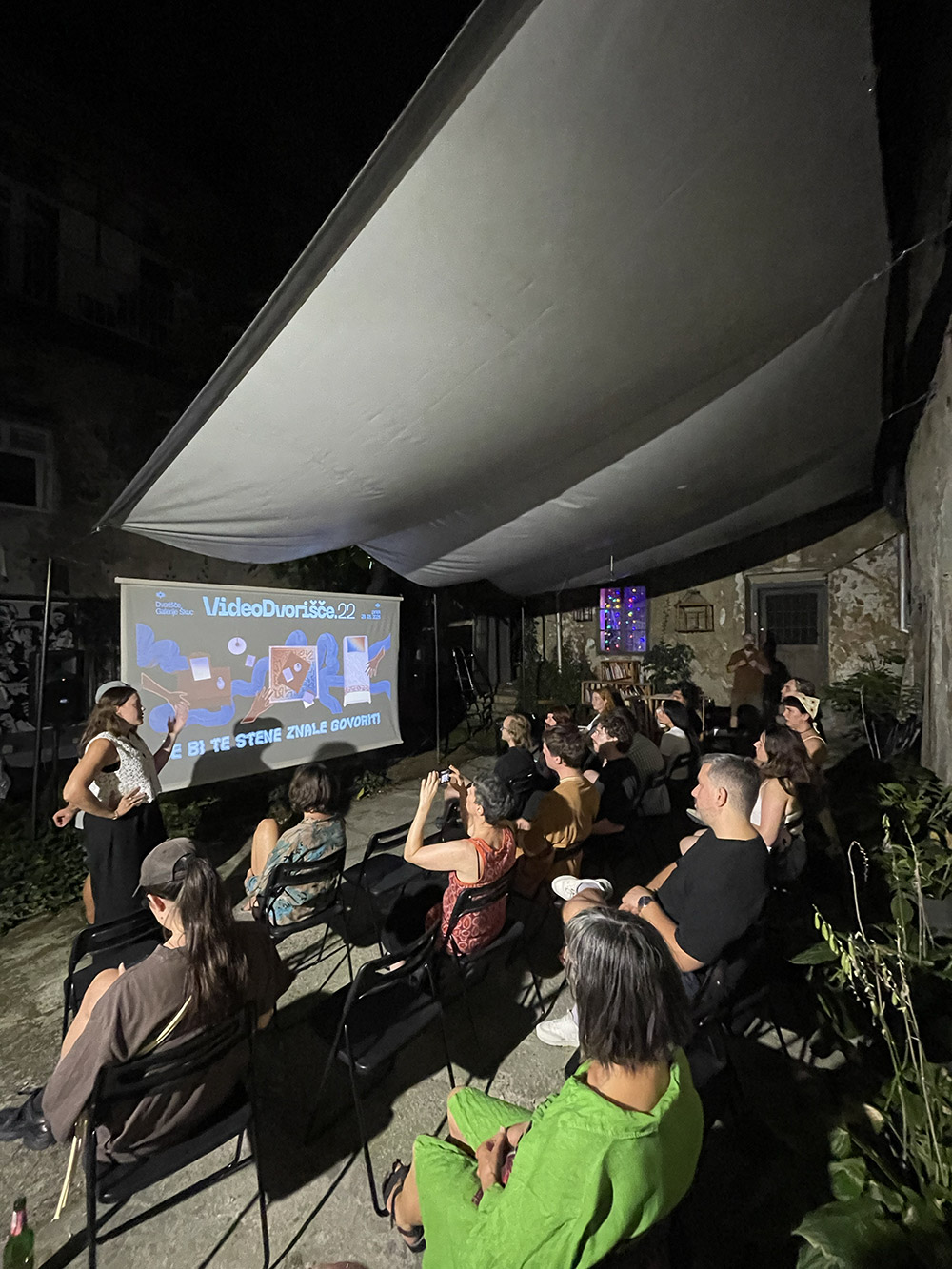
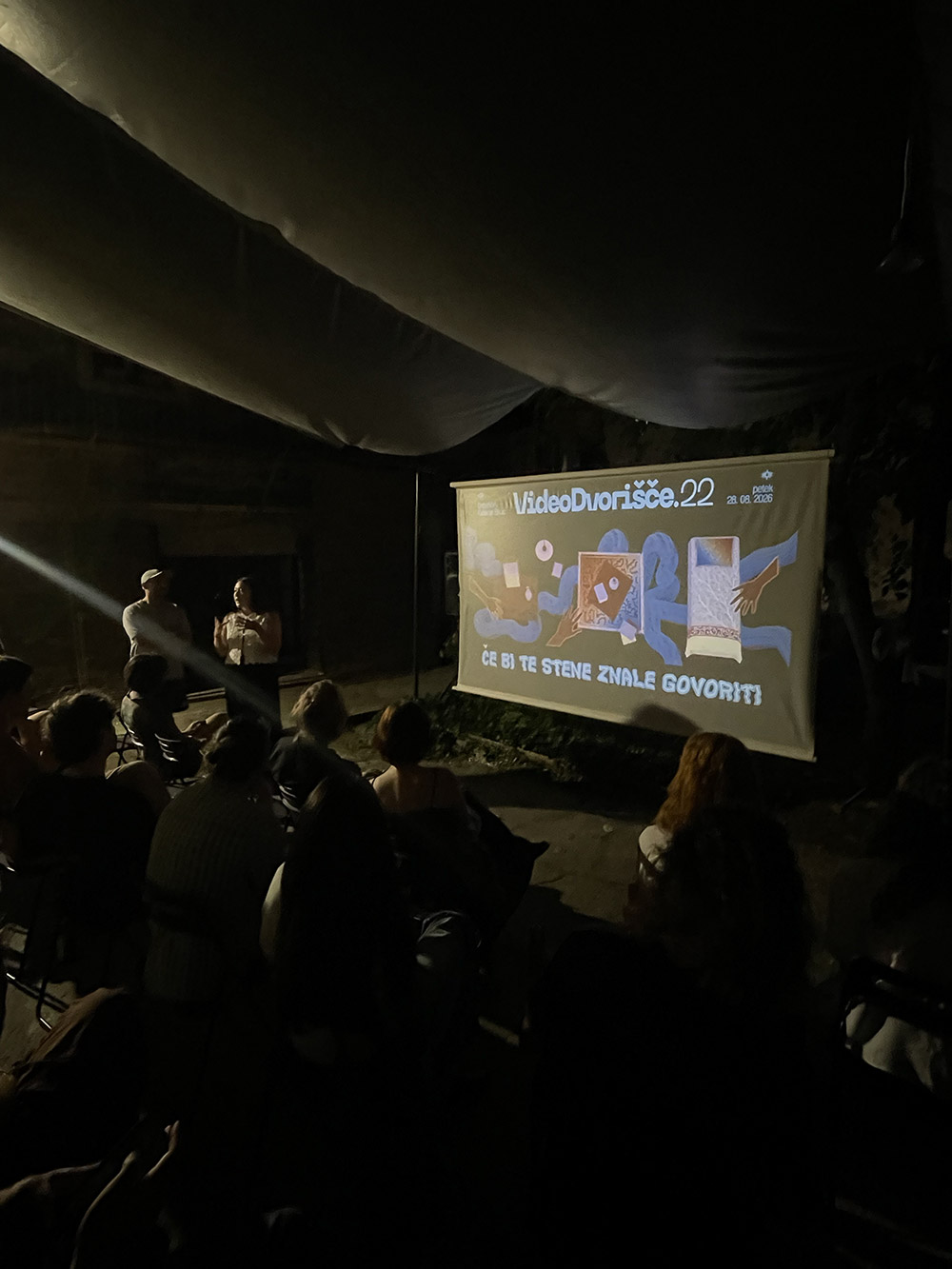
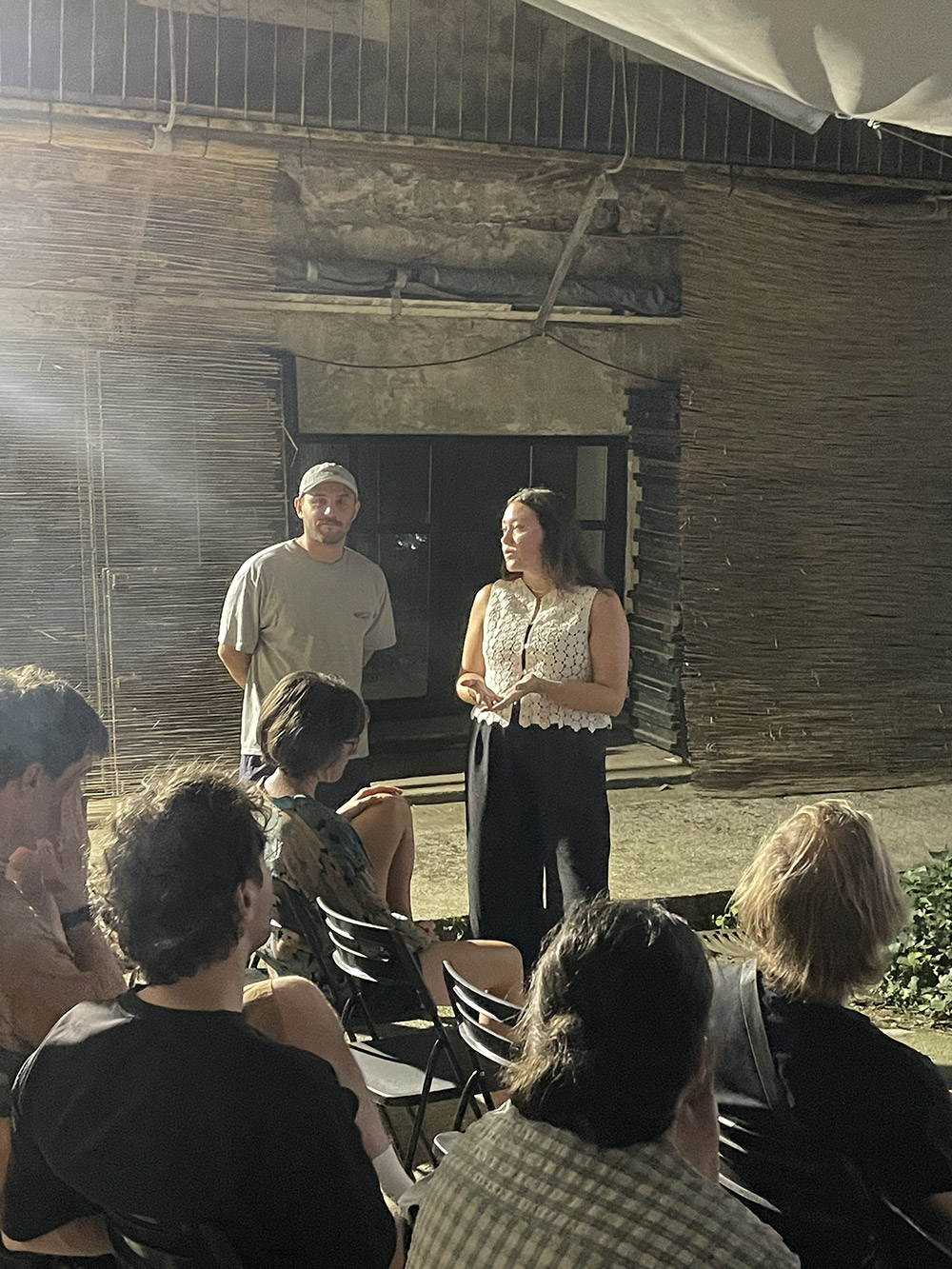
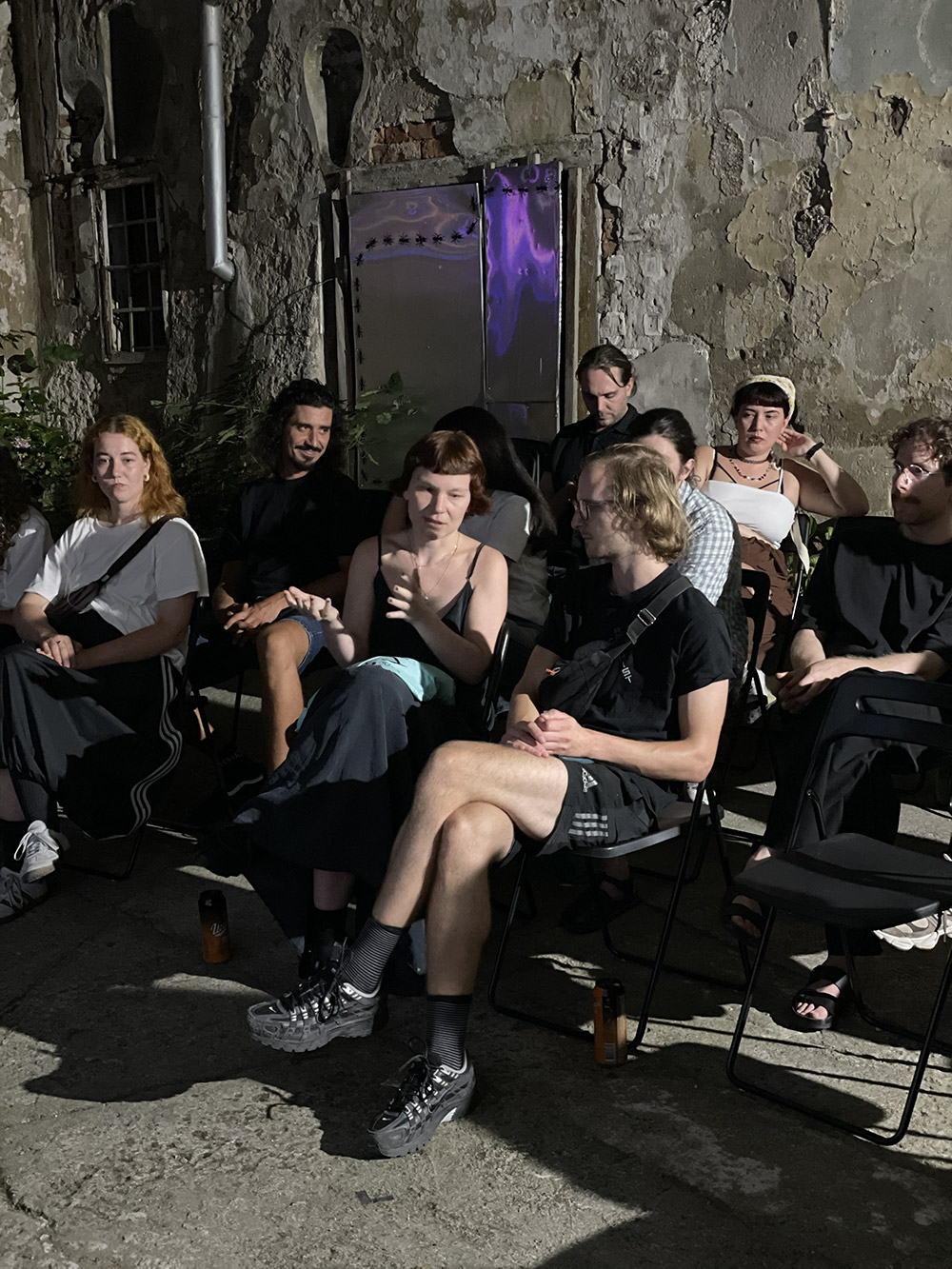
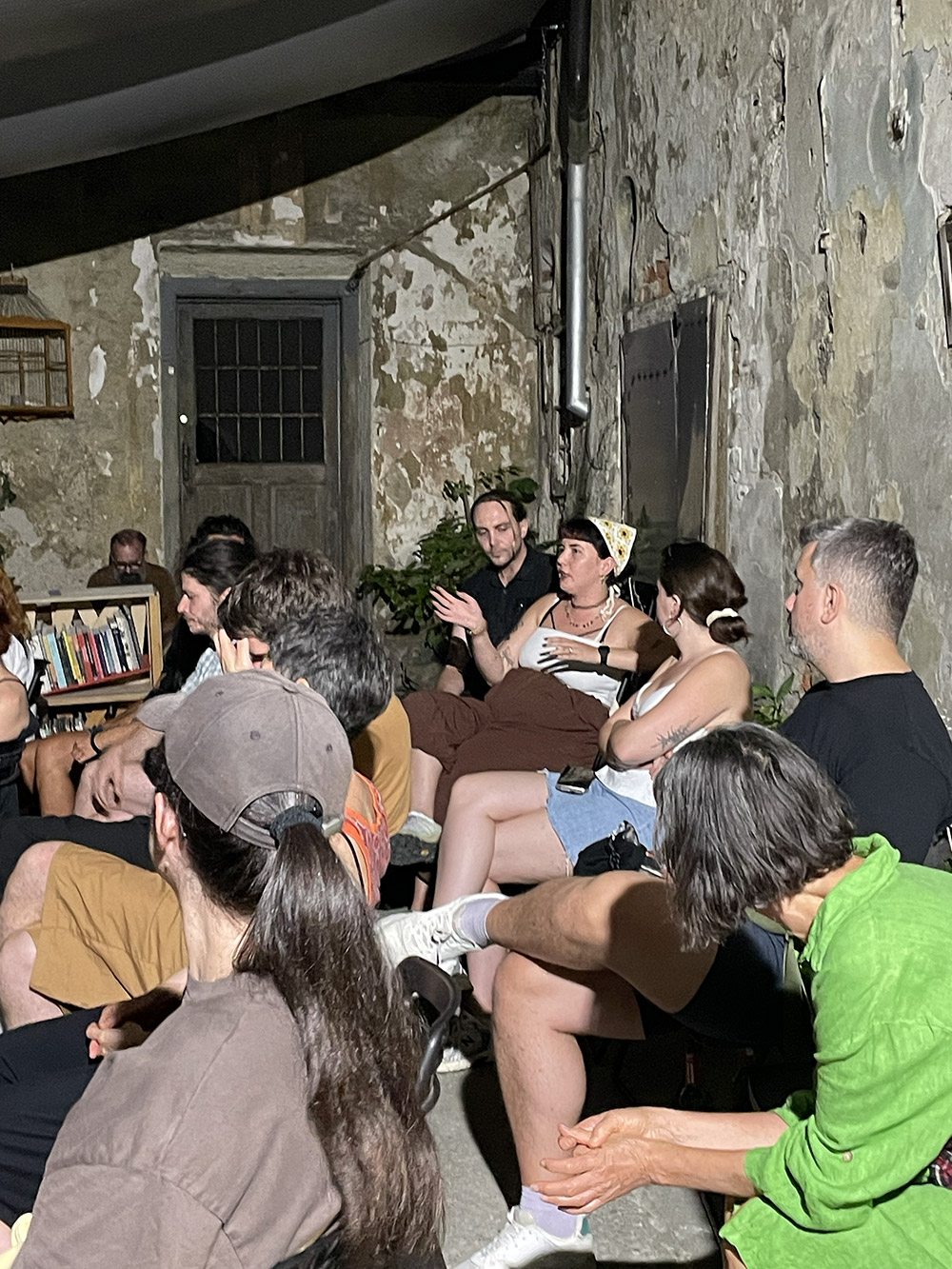
VideoGarden (VideoDvorišče) is a programme of curated screenings and talks on art, video, and film. In the spring-summer period we step out of the dark cinema and the cold gallery space into the open air. In collaboration with Škuc Gallery we organize screening events in its inner courtyard.
DIVA Station is an online and physical archive that SCCA-Ljubljana has been developing since 2005 with the aim of researching, documenting, archiving and presenting art film, video and new media art.
In case of rain, the screening will be held in the gallery.
Free admission.
Cover image design: Brina Vidic
Organization: SCCA-Ljubljana/DIVA Station, Škuc Gallery
Supported by: City Municipality of Ljubljana – Department of Culture